
Copa do Mundo 2026 começa: como o torneio de 48 seleções muda tudo
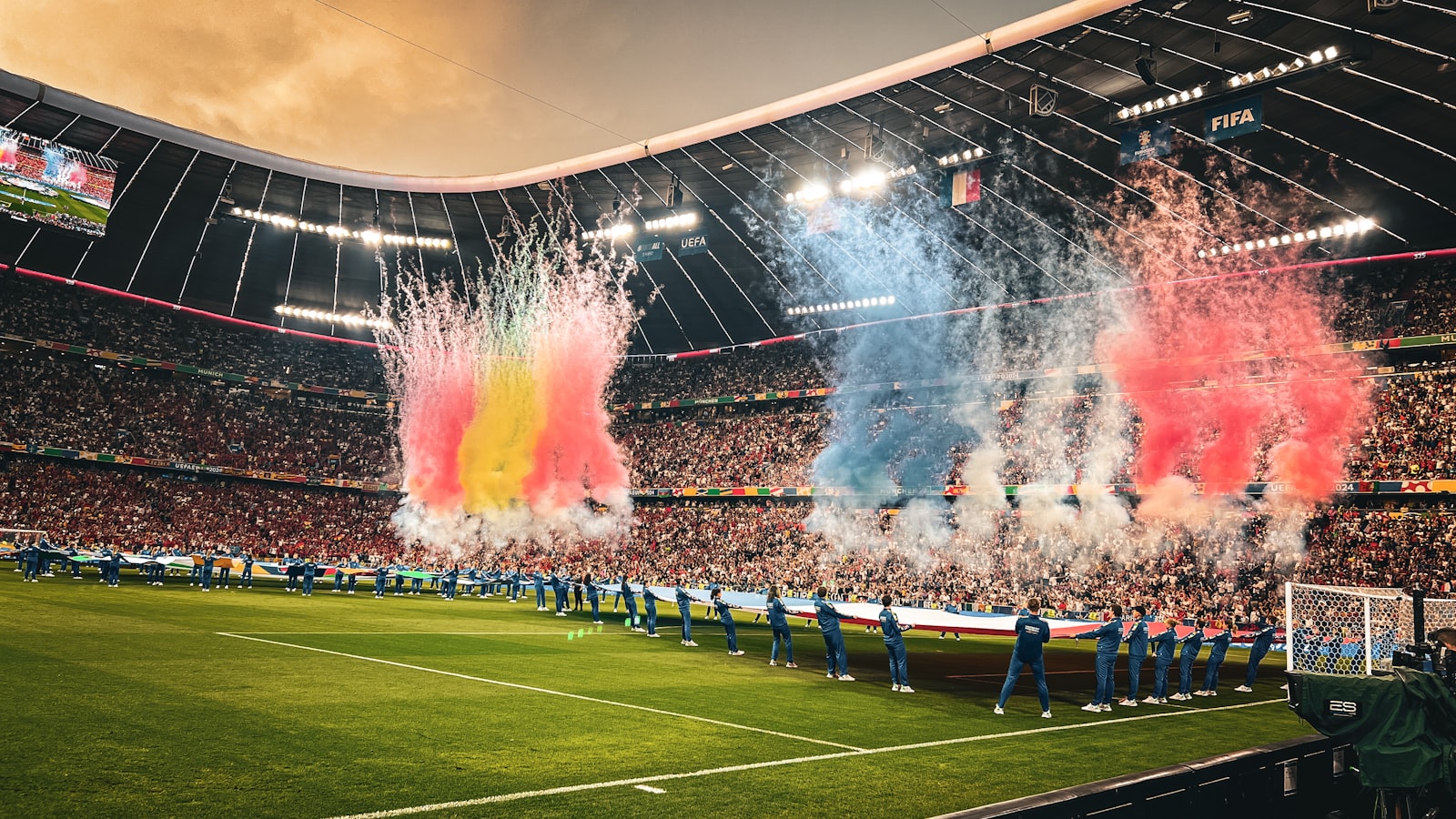
FIFA’s World Cup 2026, the first edition to feature 48 national teams and three host nations — the United States, Canada, and Mexico — kicks off on June 11, 2026, when Mexico faces an opponent to be confirmed by the draw at Estadio Azteca in Mexico City, opening a 39-day tournament that will span 16 cities and produce 104 matches, up from the 64 played in Qatar in 2022.
For casual fans in the United States who tuned into World Cups without ever reading FIFA’s technical regulations, the 2026 edition arrives with a restructured group stage, a brand-new league round, altered tiebreaker rules, and expanded VAR protocols — all operating across a three-country footprint that makes the logistics of following games more complex than any prior tournament. This guide lays out every change that matters, in the order you’ll encounter them.
O maior torneio da história começa: o que há de novo na Copa 2026
Por que a FIFA expandiu para 48 seleções — e o que isso significa
FIFA’s Council voted in January 2017 to expand the World Cup from 32 to 48 teams starting with the 2026 edition, according to the governing body’s official announcement at the time. President Gianni Infantino argued the expansion would extend the tournament’s commercial reach and give more of the world’s 211 member associations a realistic path to qualification. Critics — including many European club executives — countered that a larger field dilutes competition and adds fixture congestion for players already stretched across domestic seasons and UEFA competitions.
What the expansion unquestionably does is shift football’s geopolitical weight. Confederations outside Europe and South America now hold a larger share of the total slots, giving the format a different competitive texture than any previous edition.
Como ficou a distribuição de vagas por confederação
Under the 48-team allocation confirmed by FIFA, the six confederations receive the following automatic berths (plus one intercontinental playoff slot): UEFA (Europe) receives 16 places, up from 13; CAF (Africa) jumps from 5 to 9; AFC (Asia) moves from 4.5 to 8.5; CONCACAF (North and Central America and the Caribbean) goes from 3.5 to 6.5; CONMEBOL (South America) increases from 4.5 to 6.5; and OFC (Oceania) rises from 0.5 to 1.5. The remaining 2 spots feed into an intercontinental playoff. According to FIFA’s official qualification framework published in 2023, the expanded allocation is the most significant redistribution of World Cup places since the tournament grew from 16 to 24 teams in 1982.
For U.S. fans, the CONCACAF expansion is particularly relevant: nations like Jamaica, Panama, and Canada — who qualified for Qatar — now face more domestic competition for spots, while the region as a whole has greater combined representation than at any prior edition. Canada qualified automatically as co-host.
O novo formato explicado: grupos de 3, fase de liga e mata-mata
Como funciona a fase de grupos com apenas 3 times por chave
The 2026 World Cup format explained in its simplest terms: 48 teams are divided into 16 groups of three, with each team playing two matches in the group stage rather than the three they played in the 32-team format. The top two teams from each group advance directly; the eight best third-place finishers also advance, for a total of 32 teams entering the Round of 32. FIFA confirmed this structure in its competition regulations published in 2024.
The three-team group format drew immediate attention from coaches and analysts because it removes the possibility of a meaningless final group game — a tactical advantage that was famously exploited in West Germany’s 1-0 win over Austria in the 1982 “Disgrace of Gijón,” which allowed both teams to advance at the expense of Algeria. With only two matches per team, no pair of sides can mathematically arrange a mutually convenient result in the final round. The Athletic’s soccer desk noted in May 2025 that this structural change eliminates the “synchronized elimination” risk that plagued the three-game group format.
The 48-team World Cup groups each contain teams ranked by points (3 for a win, 1 for a draw, 0 for a loss), then by goal difference, then goals scored, then head-to-head record — in that order, per FIFA’s official tiebreaker hierarchy.
O caminho até a final: do mata-mata de 16 avos à grande decisão
After the group stage, the bracket proceeds as follows: Round of 32 (32 teams), Round of 16 (16 teams), quarterfinals (8 teams), semifinals (4 teams), third-place match, and the final. The final is scheduled for July 19, 2026, at MetLife Stadium in East Rutherford, New Jersey, which FIFA selected as the host venue in June 2022. The tournament’s knockout rounds mark a return to a familiar bracket structure, though the added Round of 32 gives lower-seeded teams an additional match before elimination — a feature that, according to a 2024 analysis by Opta Sports, statistically favors teams with strong squad depth over peak-eleven quality.
Regras novas que você precisa conhecer antes de assistir
Cobertura de boca durante protestos: o que diz a FIFA
FIFA’s disciplinary code heading into 2026 reaffirms that players who cover their mouths while speaking to teammates — a tactic used to avoid lip-reading by cameras during tactical conversations — will not face sanctions, the governing body clarified in a statement to Reuters in early 2025. However, any gesture interpreted as a political protest or message directed at match officials remains subject to yellow-card review under Article 11 of FIFA’s Disciplinary Code. The distinction between private team communication and public expression remains a gray area that FIFA has not resolved in writing, and at least one legal analyst quoted by The Guardian in March 2025 said the line “will depend entirely on the referee’s judgment in the moment.”
Substituições, cooling breaks, VAR e critérios de desempate
Teams may use five substitutions per match, with a sixth allowed in extra time — a rule adopted by the International Football Association Board (IFAB) during the COVID-19 pandemic period and made permanent for FIFA competitions from 2022 onward. Cooling breaks — mandatory stoppages of up to three minutes when pitch-side temperatures exceed 32°C (89.6°F) — apply at several U.S. venues scheduled to host June matches, including venues in Dallas (AT&T Stadium) and Los Angeles (SoFi Stadium), where summer afternoon temperatures regularly approach or exceed that threshold.
World Cup 2026 VAR rules follow the protocol established in Qatar but with one operational update: semi-automated offside technology (SAOT), which uses player skeleton-tracking data to render offside decisions in under 30 seconds, will be deployed at all 104 matches rather than only selected knockout games, according to FIFA’s technical committee briefing published in November 2024. FIFA told ESPN in December 2024 that the system reduced average offside review time from 70 seconds in Russia 2018 to 24 seconds in Qatar 2022, and the 2026 deployment is expected to cut delays further.
World Cup 2026 tiebreakers in the group stage, if two or three teams finish level on points and goal difference and goals scored, are resolved first by head-to-head results within the tied group, then by disciplinary record (yellow and red cards), and finally by FIFA World Ranking position. FIFA has not publicly confirmed whether ranking-based tiebreakers will be calculated using the ranking at the time of the draw or at the start of the tournament — a detail the governing body did not address in its 2024 regulations document, and which remains unclear.
Dia 1: México abre o torneio — agenda, cerimônia e o que assistir
Mexico’s opening match World Cup 2026 is scheduled for June 11, 2026, at Estadio Azteca in Mexico City — a venue that will become the first stadium in history to host World Cup matches in three different editions (1970, 1986, and 2026), according to FIFA’s official host city announcement. The opening ceremony is expected to precede the match, though FIFA had not confirmed the ceremony’s full program as of the time of publication.
A second match on Day 1 is scheduled at another host venue; the full Day 1 schedule depends on the draw results. FIFA plans to release the complete World Cup 2026 schedule — including kick-off times for all 104 matches — following the official draw, which is scheduled for December 2025 in Miami, according to the governing body’s event calendar.
Horários dos jogos e como acompanhar ao vivo nos EUA
World Cup 2026 how to watch in the United States: Fox Sports and Telemundo hold the English-language and Spanish-language broadcast rights respectively, as confirmed in their agreements with FIFA. Fox will simulcast select matches on FS1 and the main Fox broadcast network. Telemundo Deportes will carry all matches in Spanish across Telemundo and Peacock. Streaming viewers can access matches through the Fox Sports app (with a cable or satellite login) and Peacock’s premium tier. Neither Fox nor Telemundo has published a full match-by-match assignment schedule ahead of the draw.
Given that matches span three time zones — Eastern (New York), Central (Dallas, Mexico City), and Pacific (Los Angeles, Vancouver) — kick-off times will vary between roughly 12 p.m. ET and 9 p.m. ET on most matchdays, based on FIFA’s preliminary scheduling windows shared with host broadcasters.
Três países, uma Copa: logística e o que o fã precisa saber
Sedes nos EUA, Canadá e México: estádios e cidades-chave
The FIFA World Cup expanded format spreads across 16 host cities: 11 in the United States, 3 in Mexico, and 2 in Canada. U.S. venues include MetLife Stadium (East Rutherford, NJ), AT&T Stadium (Arlington, TX), SoFi Stadium (Inglewood, CA), Levi’s Stadium (Santa Clara, CA), Arrowhead Stadium (Kansas City, MO), Lincoln Financial Field (Philadelphia, PA), Lumen Field (Seattle, WA), Hard Rock Stadium (Miami Gardens, FL), Gillette Stadium (Foxborough, MA), and two additional sites. Canadian venues are BC Place in Vancouver and BMO Field in Toronto. Mexico hosts at Estadio Azteca (Mexico City), Estadio BBVA (Monterrey), and Estadio Akron (Guadalajara).
Fans traveling between host countries need valid passports and, depending on nationality, may require travel authorization documents for Canada or Mexico. FIFA’s ticketing terms do not include travel or accommodation, and the U.S. State Department’s travel advisory system listed no restrictions for Mexico or Canada as of publication. However, the State Department’s page for Mexico notes that some regions carry elevated advisories unrelated to the tournament venues — travelers should consult those advisories before booking.
Favoritos e surpresas: quem pode ir longe nesse formato expandido
France, England, Brazil, Argentina (the defending champion), and Spain enter as the group most consistently cited by odds compilers and analysts heading into 2026. Opta’s squad-depth index, published in early 2025, rated France first among all 48 qualified nations on a composite of squad age, club-competition minutes, and fitness data. Argentina’s Lionel Messi, 38 at the time of the tournament, has not confirmed whether 2026 will be his final World Cup — a question the Argentine Football Association told Reuters in February 2025 it could not answer on his behalf.
The expanded bracket creates a structural opening for African and Asian sides: Morocco, who reached the 2022 semifinals, and Japan, who topped a group containing Germany in Qatar, both enter with realistic Round of 8 ambitions under a format that gives them one additional match to build cohesion before the knockout stage. Senegal, Nigeria, South Korea, and Australia are among the sides analysts at The Athletic identified in April 2025 as potential quarterfinal threats in a field where the additional Round of 32 dilutes the advantage of historically dominant nations.
Como preencher seu wall chart e acompanhar a Copa toda
Tracking all 104 matches across 39 days requires more planning than any prior World Cup. FIFA will release an official wall chart after the December 2025 draw; U.S. broadcaster Fox Sports typically publishes a printable bracket within 24 hours of the draw. The bracket’s structure — 16 groups feeding into a Round of 32, then a conventional knockout pyramid — means each group’s position (1st, 2nd, or best third-place) determines which bracket half a team enters, as it did in Euro 2016 and the 2021 Nations League under a similar 24-team expanded format.
For fans tracking standings daily, FIFA’s official app (available on iOS and Android) will display live group tables, updated tiebreaker standings, and VAR decision logs for each match, according to FIFA’s digital product roadmap shared with press partners in January 2025. ESPN’s FC Daily podcast and The Athletic’s World Cup coverage hub are both committing to daily tournament recaps, giving casual followers a reliable daily-summary option without requiring live viewing of all matches.
Reuters, The Athletic, ESPN, FIFA’s official competition regulations (2024 edition), Opta Sports, and The Guardian provided the sourcing and data cited above. FIFA’s official squad allocation and host city documentation, published between 2022 and 2024, underpins the confederation and venue details throughout.
The next concrete marker on the road to the tournament is the official draw, scheduled for Miami in December 2025, which will set all 16 groups and trigger release of the full match schedule — including Day 1 kick-off times and the bracket for the knockout rounds.