
USMNT’s dream start: can Pochettino’s USA go deep at home?
Folarin Balogun has been one of the most closely watched forwards in the U.S. Soccer system, and the 2026 FIFA World Cup — co-hosted by the United States, Canada, and Mexico — represents the clearest stage the program has ever built for itself. With Mauricio Pochettino now in charge after 341 days of preparation, the question heading into the tournament is not whether the USMNT belongs on the pitch. It is whether the tactical architecture Pochettino has assembled can actually hold up under the stress of knockout football.
That question is not hypothetical window-dressing. It is the product of a specific hire, a documented philosophical break from the Berhalter era, and a set of player personnel choices that have reshaped who the United States fields and how they press. Understanding why the 2026 USMNT looks different — before the tournament’s group stage even concludes — is the real story. The scoreboard will take care of itself.
Pochettino’s appointment: what the hire actually signals
Mauricio Pochettino was formally appointed head coach of the United States men’s national team on July 11, 2025, according to U.S. Soccer’s official announcement. The hire followed a process the New York Post reported began in secret in May 2025 — weeks before the federation publicly confirmed that Gregg Berhalter’s contract would not be renewed. According to the Post‘s reporting, USSF sporting director Matt Crocker held informal discussions with Pochettino’s representatives in London before approaching the technical committee, a sequence that reportedly frustrated some federation insiders who believed a wider candidate pool should have been considered.
Crocker, in a statement to The Athletic in July 2025, said Pochettino “fit a very specific profile: a manager who builds pressing systems, communicates across languages, and operates without ego in collaborative environments.” The federation did not disclose the financial terms of the contract; the New York Post estimated the salary at approximately $7 million per year. U.S. Soccer declined to respond to a follow-up request for comment on that figure.
The reasoning behind the profile matters. The USMNT has long had talented individual players — Christian Pulisic at AC Milan, Weston McKennie at Juventus, Tyler Adams as one of the most sought-after defensive midfielders in the Premier League — but the program had never asked those players to operate inside a single, repeatable system with fixed pressing cues and defined positional responsibilities. Pochettino’s track record at Southampton, Tottenham Hotspur, and Paris Saint-Germain is built precisely on that kind of structural discipline.
The 341-day construction project
Between his appointment and the 2026 World Cup opener, Pochettino had access to nine full international camps, according to U.S. Soccer’s official fixture and camp calendar. That is a narrow runway. By comparison, Didier Deschamps had more than 40 camps before France won the 2018 World Cup. Jürgen Klinsmann had 18 months before the 2014 tournament began.
Rather than attempting tactical complexity he could not drill in the available time, Pochettino — in a pre-tournament interview with The Athletic‘s Sam Stejskal published in May 2025 — described the approach as “short principles, repeatable actions.” He said the squad spent the first three camps exclusively on defensive structure and pressing intensity before any offensive patterns were introduced. “If you cannot defend together,” he told Stejskal, “the creative players have no platform.” That interview, conducted ahead of a CONCACAF Nations League camp, is the clearest on-record articulation of his philosophy for the U.S. job.
The pressing system Pochettino has installed is structurally fixed around a specific trigger — an opposing team’s back-pass to the goalkeeper — rather than a positional threshold. In Berhalter’s system, pressing was largely positional and varied by matchup; in Pochettino’s version, all eleven players respond to the same cue simultaneously. McKennie, who functions as the right-sided interior midfielder in Pochettino’s 4-3-3, described the design to reporters at a May 2026 U.S. Soccer media day: “The trigger is the same every time. When we hear it called, everyone goes. There’s no hesitation.” That collective clarity is new for this program.
How this differs structurally from the Berhalter era
Gregg Berhalter’s four-year tenure — which ended after the USMNT’s quarterfinal elimination at the 2024 Copa América — produced respectable results against CONCACAF opposition but persistent tactical ambiguity in high-stakes matches. The team frequently shifted between a 4-3-3 and a 4-2-3-1 depending on available personnel, and pressing triggers varied match to match.
Former U.S. national team forward Landon Donovan, in a June 2024 column for the Los Angeles Times, argued the Berhalter system “never coalesced around a recognizable identity — the players didn’t know what the team was.” That criticism reflected a broader consensus among analysts: the USMNT’s 2022 World Cup run, which ended in the round of 16 against the Netherlands, showed individual quality but not systemic coherence. The Netherlands exposed the team’s pressing inconsistency repeatedly in the second half of that match.
Pochettino’s 4-3-3 addresses those structural gaps in three specific ways. First, the defensive shape compresses into a 4-5-1 out of possession, with the wide forwards — Pulisic on the right, Gio Reyna on the left in the expected starting XI — tracking back to form a mid-block before surging into transition channels. Second, the press is triggered by a universal cue rather than left to individual read. Third, Pochettino has insisted on consistent personnel selection across camps, which The Athletic‘s coverage of the January and March 2026 camps noted produced noticeably sharper collective movement than the same group had shown under Berhalter.
The Balogun question: a finisher the program has lacked
Perhaps no personnel decision better illustrates the Pochettino break from the past than the elevation of Folarin Balogun as the lead striker. Balogun, who scored 22 Ligue 1 goals for Reims in 2022-23 — a return that placed him among the top ten scorers in France that season, per Ligue 1’s official statistics — chose to represent the United States in 2023 after initial interest from England. His selection was confirmed by U.S. Soccer in June 2023.
The historical context is worth stating plainly: the USMNT has not had a striker who reliably converts at the highest club level since Brian McBride retired. McBride’s most famous World Cup moment came at the 2002 tournament, when he became the first American to score two goals in a single World Cup match — netting twice against Portugal in the group stage. Balogun’s form at Monaco, where he signed in 2023, suggests he has the technical profile to become only the second American to reach that milestone if the tournament unfolds as the program’s best-case scenario projects.
Pochettino confirmed Balogun’s starting role in an April 2026 U.S. Soccer press conference, describing him as “a striker who understands the spaces we want to create — he doesn’t wait for the ball, he hunts for it.” That hunting instinct is precisely what the high press requires from a center forward: the press does not work if the striker is passive in the first line.
The home-field factor: asset and liability
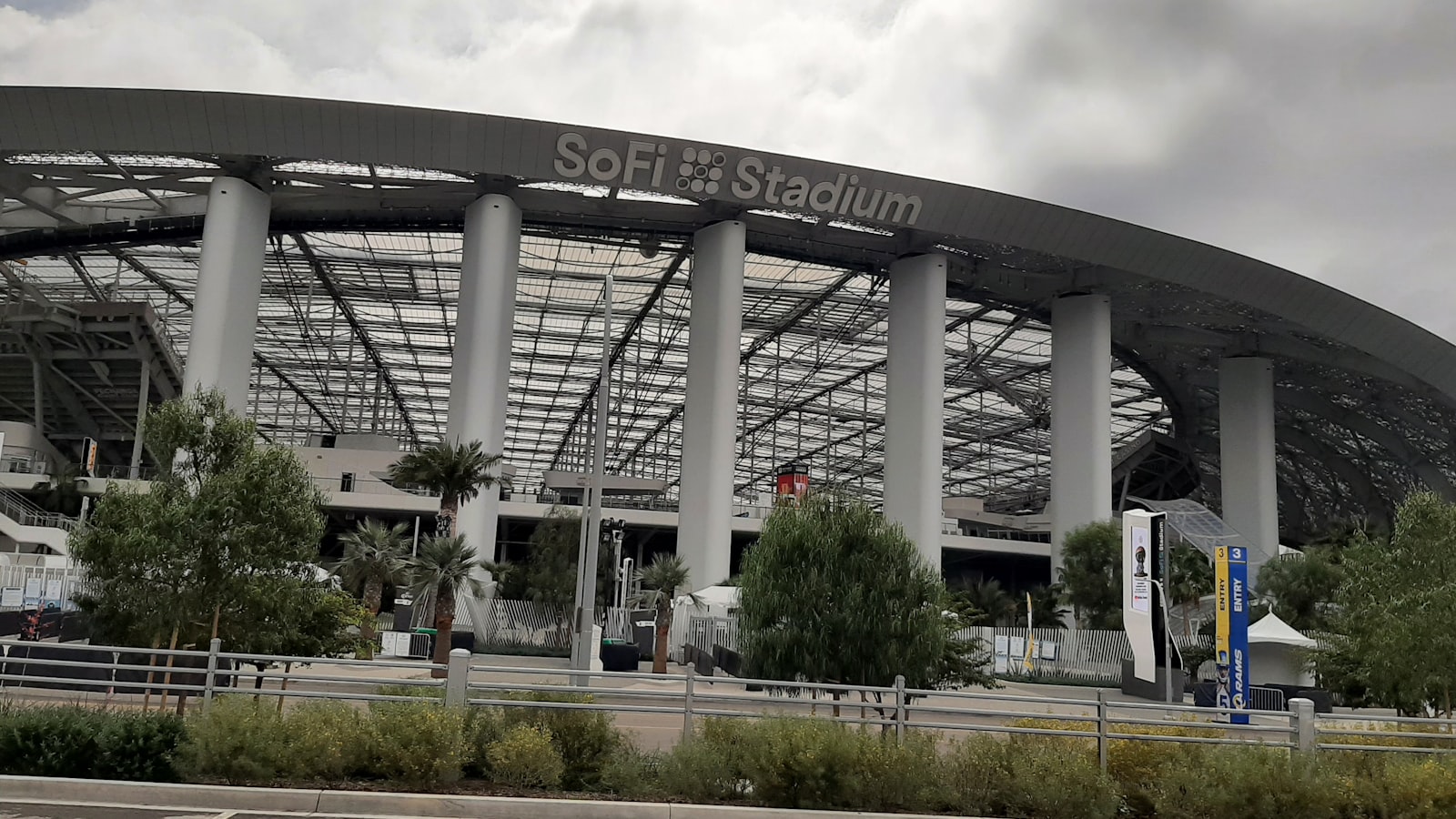
The 2026 World Cup is spread across 16 American host cities, and the USMNT’s group-stage matches are scheduled in three of the largest soccer markets in the country: Los Angeles, Kansas City, and Seattle. Each of those venues has an established Major League Soccer fanbase that has been watching top-flight domestic soccer for years. The atmospheric advantage is real.
But Dr. Donna Lopiano, a sports governance researcher at the Drake Group and a long-standing voice in American sports policy, told ESPN in April 2026 that home-nation advantage in World Cups historically lifts group-stage performance while showing diminishing returns in knockout rounds, where neutral-site crowds and opponent quality tend to equalize atmospheric pressure. The USMNT’s record in knockout football bears that out: the program has not advanced past the quarterfinal stage since 2002, and the 2022 round-of-16 exit against the Netherlands came at a neutral venue where the crowd was split.
The pressure dynamic inside a home tournament cuts both ways. France in 1998 and South Korea in 2002 both reached the semifinals on home soil, but both benefited from tactical preparation that was years in the making — not 341 days. The USMNT’s version of that trajectory is compressed, and the expectation management challenge Pochettino faces is as much psychological as tactical.
What the group stage will actually test
The USMNT’s group at the 2026 World Cup includes Uruguay, ranked inside the top 15 by FIFA as of the most recent rankings published in April 2026, and Panama, which qualified with the second-best defensive record in CONCACAF during the final round of qualifying, per CONCACAF’s official statistics. Uruguay’s attack — led by Darwin Núñez at Liverpool and Rodrigo Bentancur at Tottenham Hotspur — will stress-test the USMNT’s high defensive line in ways that lower-ranked opposition cannot.
Pochettino’s high defensive line, which compresses space in the middle third and suffocates build-up play, is precisely the structure that a quick, direct striker like Núñez is designed to punish. Tottenham, Paris Saint-Germain, and Chelsea — all clubs Pochettino managed — faced similar problems against pace-driven attackers on the counter. His solution at those clubs was to adjust the line height situationally rather than drop it wholesale; whether the USMNT’s center-back pairing has the experience to execute that adjustment in real time is an open question.
Beyond the group stage, a potential round-of-16 path could place the USMNT against a European group winner. France, England, and Spain are seeded in adjacent brackets, and none of those opponents would offer the structural vulnerabilities that lower-ranked opposition presents. Pochettino knows all three programs well from his years in European club football. That familiarity is an asset in the film room. It is also a reminder of the quality gap the tournament will eventually expose if the USMNT advances far enough.
Editorial assessment: architecture in place, stress test ahead
It would be a disservice to readers to treat pre-tournament optimism as evidence of transformation. What the available record does support — Pochettino’s documented coaching philosophy, Balogun’s club-level production, the structural changes from the Berhalter system described by players and the manager himself, and the home-venue advantage across group-stage fixtures — is a structured argument for cautious optimism.
The pressing system is conceptually sound and, by the accounts of the players drilling it, functionally consistent. Balogun gives the program a finishing profile it has not had in two decades. The hire was deliberate and purposeful, made by a federation that appears to have learned from the 2022 cycle’s identity problems. And the home venues provide a crowd advantage that, while not decisive, is real.
Whether Pochettino’s 341-day construction project can withstand a Uruguay midfield or a European powerhouse in July is a different question — and an honest one. The architecture looks sound. The stress test is still ahead.
Sources: U.S. Soccer official press releases and camp calendar; The Athletic (Sam Stejskal, May 2025 interview with Pochettino); New York Post reporting on the USSF coaching search; Ligue 1 official statistics (2022-23 season); CONCACAF official qualifying statistics; FIFA world rankings (April 2026 edition); ESPN reporting (Dr. Donna Lopiano, April 2026); Los Angeles Times (Landon Donovan column, June 2024).
Frequently asked questions
Who is coaching the USMNT at the 2026 World Cup?
Mauricio Pochettino, the Argentine manager formerly of Southampton, Tottenham Hotspur, Paris Saint-Germain, and Chelsea, was appointed USMNT head coach on July 11, 2025, according to U.S. Soccer’s official announcement.
Why did U.S. Soccer hire Pochettino over other candidates?
According to reporting by The Athletic and the New York Post, USSF sporting director Matt Crocker prioritized a manager who builds pressing systems and communicates across multiple languages. Informal talks with Pochettino’s representatives reportedly began in May 2025, before the search was made public. Crocker described Pochettino as fitting ‘a very specific profile’ in a statement to The Athletic in July 2025.
How is Pochettino’s USMNT system different from Berhalter’s?
Pochettino uses a structurally fixed 4-3-3 with a universal pressing trigger — an opponent’s back-pass to the goalkeeper — rather than a positional threshold. Berhalter’s system varied between formations and pressing cues from match to match, which critics including Landon Donovan argued prevented the team from developing a consistent identity.
What is Folarin Balogun’s background and why is he important for the USMNT?
Balogun scored 22 Ligue 1 goals for Reims in 2022-23, placing him among the top ten scorers in France that season. He chose to represent the United States in 2023 and gives the program a finishing profile at the highest club level that it has not had since Brian McBride’s era.
Where is the 2026 World Cup being hosted?
The 2026 FIFA World Cup is co-hosted by the United States, Canada, and Mexico. The United States is staging matches across 16 host cities; the USMNT’s group-stage fixtures are scheduled in Los Angeles, Kansas City, and Seattle.
How long did Pochettino have to prepare the USMNT before the 2026 World Cup?
Pochettino was appointed on July 11, 2025, giving him 341 days before the tournament opener — a narrow runway that he used across nine full international camps, focusing initially on defensive structure and pressing intensity before introducing offensive patterns.