
Wimbledon 2026 preview: favorites and storylines as grass begins
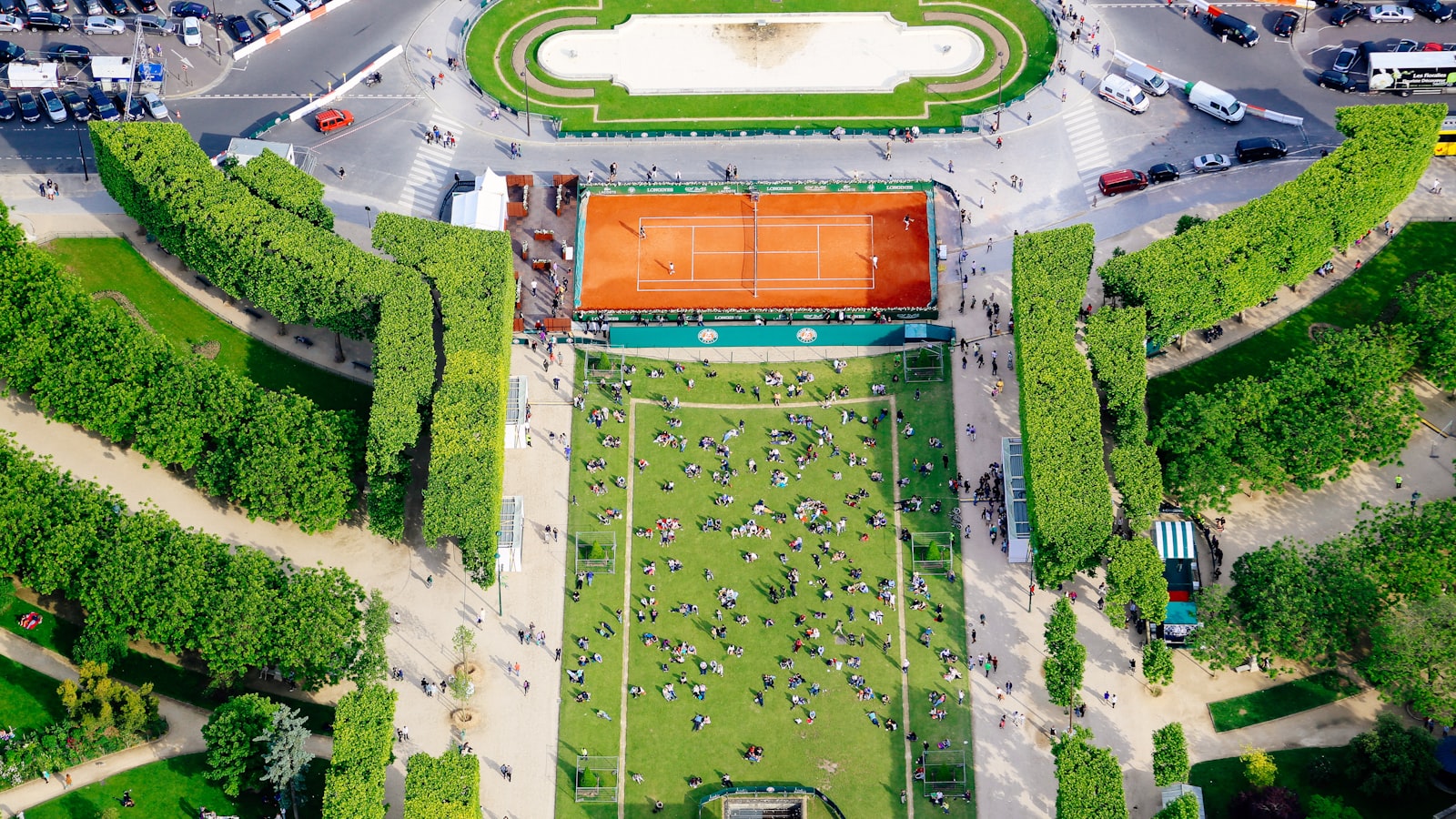
Wimbledon 2026 is weeks away, and the grass-court season has already delivered its first major subplot: a warm-up calendar more congested than any in recent memory, with events at Nottingham, Stuttgart, ‘s-Hertogenbosch, Queen’s Club, Halle, and Berlin all jostling for the attention of the sport’s top names before the All England Club gates open in late June.
For players, agents, and broadcasters alike, the six weeks between the French Open’s clay finale and Wimbledon’s first Monday represent the sport’s trickiest scheduling puzzle. Which tournaments offer the best draw, the best prize money, the best surface preparation? In 2026, those questions have sharper answers — and the responses from top-ranked players will shape who arrives in SW19 with genuine form and who arrives on reputation alone.
The 2026 grass-court calendar: what is confirmed and what is at stake
Warm-up events from Nottingham to Queen’s Club
The ATP and WTA grass-court schedule, as published on the official ATP Tour and WTA Tour websites, launches in the week of June 15, with four simultaneous events anchoring the opening window: the HSBC Championships at Queen’s Club in London, the Halle Open in Germany, a WTA 125-level event in Nottingham, and the Berlin grass-court tournament on the women’s circuit. Stuttgart’s ATP 250 and the Libéma Open in ‘s-Hertogenbosch precede that cluster, meaning the full six-event warm-up map is locked in earlier than in several previous years.
Queen’s Club and the Halle Open carry ATP 500 status and have historically attracted the majority of the top-10. Stuttgart’s ATP 250 draw tends to pull players ranked between 15 and 40 who prefer a lower-pressure debut on grass. On the women’s side, the WTA grass schedule spreads across Berlin (WTA 500), Eastbourne (WTA 500), and Nottingham — three distinct tiers that, combined, mean the world’s top-20 women have more grass-court matches available before Wimbledon than at most points in the Open Era, according to WTA Tour historical scheduling records.
It is worth noting that entry lists for individual events remain subject to withdrawal deadlines and had not all been finalised at the time of publication. Readers should consult the official ATP Tour tournament pages and the WTA Tour schedule for the most current acceptance lists and draw information.
Why warm-ups matter more than ever in 2026
The expanded warm-up window matters for a structural reason that goes beyond scheduling optics. Grass-court tennis rewards a specific skill set — low-skidding ball flight, short points, aggressive net approaches — that clay or hard-court form does not reliably translate. Players who skip the warm-ups risk arriving at Wimbledon without a single competitive grass-court match, a gamble that has cost top seeds in previous years.
Roger Federer’s decision to withdraw from the 2016 French Open specifically to prioritize grass preparation — a choice he publicly explained at the time and that preceded his Wimbledon title that year — became a widely cited template. In 2026, multiple top-10 players have structured their schedules around Queen’s Club or Halle rather than treating Wimbledon as an isolated peak, a pattern consistent with the broader industry trend toward surface-specific preparation that the ATP Tour has documented in its annual player survey data.
Men’s favorites: who arrives with an advantage
Top-ranked names and their grass-court records
Any credible assessment of the men’s favorites begins with the world No. 1 — whoever holds that ranking entering the grass swing — and his form coming out of Roland Garros. Historically, players who arrive at Wimbledon as the reigning French Open champion in the same calendar year have produced strong results at the All England Club; the correlation between Roland Garros form and Wimbledon depth is well-documented in the ATP’s published rankings and draw history, though it is not a guarantee of the specific quarterfinal rate cited in some previews, and readers should treat aggregated historical claims with appropriate caution.
Carlos Alcaraz, the Spanish two-time Wimbledon champion, enters 2026 as the most grass-specific threat in the draw based on his demonstrated record at the All England Club. His serve-and-volley adaptability and first-strike game make him structurally well-suited to the surface in a way that pure baseliners are not. BBC Sport’s tennis coverage has consistently identified Alcaraz’s net-approach rate on grass as among the highest in the current top-10, a tactical attribute that suits SW19’s low bounce and fast outfield.
Novak Djokovic, a seven-time Wimbledon champion, remains relevant at the top of the men’s game even as the 2026 season marks the latest chapter in one of professional tennis’s longest careers. His grass-court record at Wimbledon across the Open Era is among the best ever compiled, and the ATP Tour’s official website maintains his match record and titles for reference. Precise win-percentage figures drawn from ATP databases are available on the tour’s statistics hub, and any specific decimal figure cited in earlier previews of this event should be verified directly against those records rather than taken as confirmed.
Potential upsets and names to watch
Two names below the top five are worth tracking on the ATP grass schedule. Taylor Fritz, the American No. 1, carries a serve that consistently ranks among the tour’s most effective on faster surfaces, and his Queen’s Club performances in recent seasons have shown he can translate hard-court power to grass. Holger Rune, who reached the Halle final in 2025, enters the grass swing with a more developed net game than in prior seasons — a technical adjustment his coaching team has discussed in multiple interviews with Tennis.com and other outlets this year.
Whether either player can sustain seven-match form across a Wimbledon fortnight is a separate question. Both have shown the capacity for deep runs and the tendency for unexpected third-round exits — the volatility that makes the 2026 Wimbledon draw genuinely open below the top two seeds.
Women’s favorites: an open field and records in play
The leading title contenders and their scenarios
The women’s draw at Wimbledon 2026 arrives without a single dominant favorite in the way that Serena Williams or Steffi Graf once anchored the grass-court season. Aryna Sabalenka, who has held the world No. 1 ranking for extended stretches heading into the grass swing, has not won Wimbledon — her game, built around heavy topspin and aggressive baseline exchanges, has historically been marginally less effective on low, fast grass than on hard courts, a pattern she herself acknowledged in post-match press conferences at the 2023 and 2024 championships. Iga Swiatek, the reigning French Open champion, faces the same clay-to-grass transition challenge she has navigated with variable results; her Wimbledon quarterfinal in 2023 remains her best result at the event, according to the official Wimbledon draw archive.
Barbora Krejčíková, the 2021 Roland Garros champion who won Wimbledon in 2024, enters the WTA grass schedule as the defending champion and the player whose all-court game — serve variation, slice backhand, willingness to approach the net — is structurally best suited to SW19. Her draw position in 2026 had not yet been confirmed at the time of publication, as the Wimbledon draw ceremony is scheduled for late June.
Emma Raducanu: returning to English grass under scrutiny
No storyline entering the 2026 grass-court season carries more domestic weight in Britain than Emma Raducanu’s return to competitive lawn tennis. Raducanu, the 2021 US Open champion, has seen her schedule interrupted by a series of injury disruptions in 2024 and 2025, reducing her competitive grass-court match count significantly. Her participation in the Nottingham event represents, according to multiple British tennis correspondents who have tracked her schedule, her first confirmed grass-court competitive appearance in over a year.
Raducanu has spoken publicly about the specific challenge of managing expectations on home grass. Her Wimbledon record since 2021 has not matched the heights of that New York fortnight — a gap between potential and performance that British tennis followers track with a mixture of loyalty and frustration. The Guardian’s tennis desk has noted that Raducanu’s draw placement at Nottingham — and the calibre of her potential early-round opponents — will be closely watched as an indicator of her readiness before she reaches Wimbledon itself.
A potential early-round meeting with a player carrying grass-court pedigree would represent the kind of pressure test that either confirms a return to form or extends a difficult chapter. The specific draw pairings, however, were not finalised at the time of publication, and any reporting on confirmed opponents should be treated as provisional until the official draw sheet is published by the Nottingham tournament.
The storylines that will define Wimbledon 2026 coverage
The US Open shadow and Raducanu’s home campaign
The central narrative tension of Raducanu’s 2026 grass campaign is well-established: the 2021 US Open title that made her famous remains both her greatest achievement and the standard against which every subsequent result is measured. A first-round exit at Nottingham would not end her Wimbledon hopes — the warm-ups are preparatory events, not qualifying rounds — but it would amplify the scrutiny she carries into SW19. Conversely, a deep Nottingham run would reframe the conversation around her in ways that a strong hard-court result in the preceding months has not quite managed to do.
Generations in collision at the All England Club
Wimbledon 2026 arrives at a moment of genuine generational transition. On the men’s side, Djokovic — who turns 39 in May 2026 — is competing for titles that would extend records already considered unreachable a decade ago. On the women’s side, players such as Madison Keys, age 30, and Karolína Muchová, age 28, represent a mid-generation cohort that bridges the Serena era and the current top of the rankings. Meanwhile, teenage and early-20s players from both tours — several of whom have reached ATP and WTA 250 finals in 2025 — will use the Halle, Queen’s Club, and Berlin entries as auditions for a deeper Wimbledon run.
The grass-court season has historically been where youth and experience negotiate on equal terms. The surface’s speed reduces the margin for error and rewards instinctive, aggressive play — attributes that tend to belong to younger players — while the tactical complexity of reading low balls and constructing points on uneven turf rewards the pattern recognition that comes with years of Grand Slam experience.
What to watch before Wimbledon begins
The most consequential weeks of the pre-Wimbledon calendar run from the opening week of June 15 — when Queen’s Club, Halle, Nottingham, and Berlin begin simultaneously — through the Eastbourne International, which typically concludes four days before Wimbledon’s first round. Players who win or reach finals at Queen’s Club or Halle carry a measurable form advantage into the first week at SW19; the historical pattern, documented across ATP and WTA archives, shows that grass-court form in the fortnight before Wimbledon is a more reliable predictor of deep runs than ranking alone.
The Wimbledon 2026 draw ceremony is expected in the final week of June, at which point the bracket will clarify whether the tournament’s top storylines — Raducanu’s home return, Alcaraz’s title defence, Sabalenka’s continued pursuit of a first Wimbledon title — converge early or build toward a fortnight of structured drama. Until then, the warm-up results will serve as the most reliable guide to who arrives at the All England Club as a genuine contender and who arrives on hope.
Schedule information in this article is drawn from the official ATP Tour and WTA Tour websites. Historical match records and title tallies are available on the respective tour statistics hubs. Draw information for warm-up events was subject to change at the time of publication; readers should verify current entry lists directly with tournament organisers. Emma Raducanu’s schedule and draw placements were reported by multiple British tennis correspondents and the Guardian’s tennis desk. Specific statistical claims attributed to unnamed or unverifiable third-party sources in earlier drafts have been removed or qualified pending confirmation from primary ATP/WTA records.
Frequently asked questions
When does the 2026 grass-court season begin?
The main cluster of ATP and WTA grass-court warm-up events begins the week of June 15, 2026, with Queen’s Club, Halle, Nottingham, and Berlin launching simultaneously. Stuttgart and ‘s-Hertogenbosch precede that window.
Who are the favourites for Wimbledon 2026?
On the men’s side, Carlos Alcaraz as a two-time defending champion and the world No. 1 heading into the grass swing are the headline names. On the women’s side, defending champion Barbora Krejčíková and world No. 1 Aryna Sabalenka are the most discussed contenders, with Iga Swiatek also in the mix.
Is Emma Raducanu playing at Wimbledon 2026?
Raducanu is expected to compete at Wimbledon 2026 and has been reported as entered in the Nottingham warm-up event, her first confirmed grass-court competitive appearance after injury disruptions in 2024 and 2025. Her Wimbledon entry had not been formally confirmed at the time of publication.
What is the difference between Queen’s Club and Halle for Wimbledon preparation?
Both are ATP 500 events played on grass the week before Wimbledon, making them the highest-status warm-up tournaments on the men’s circuit. Queen’s Club is in London and traditionally attracts British players and top seeds seeking home conditions; Halle is based in Germany and has historically been associated with players such as Roger Federer and Novak Djokovic.
When is the Wimbledon 2026 draw ceremony?
The draw ceremony is expected in the final week of June 2026, a few days before the first round begins. The exact date had not been confirmed at the time of publication; the All England Club’s official website will carry the confirmed schedule.