
NBA offseason preview: free agency, draft, and what comes next
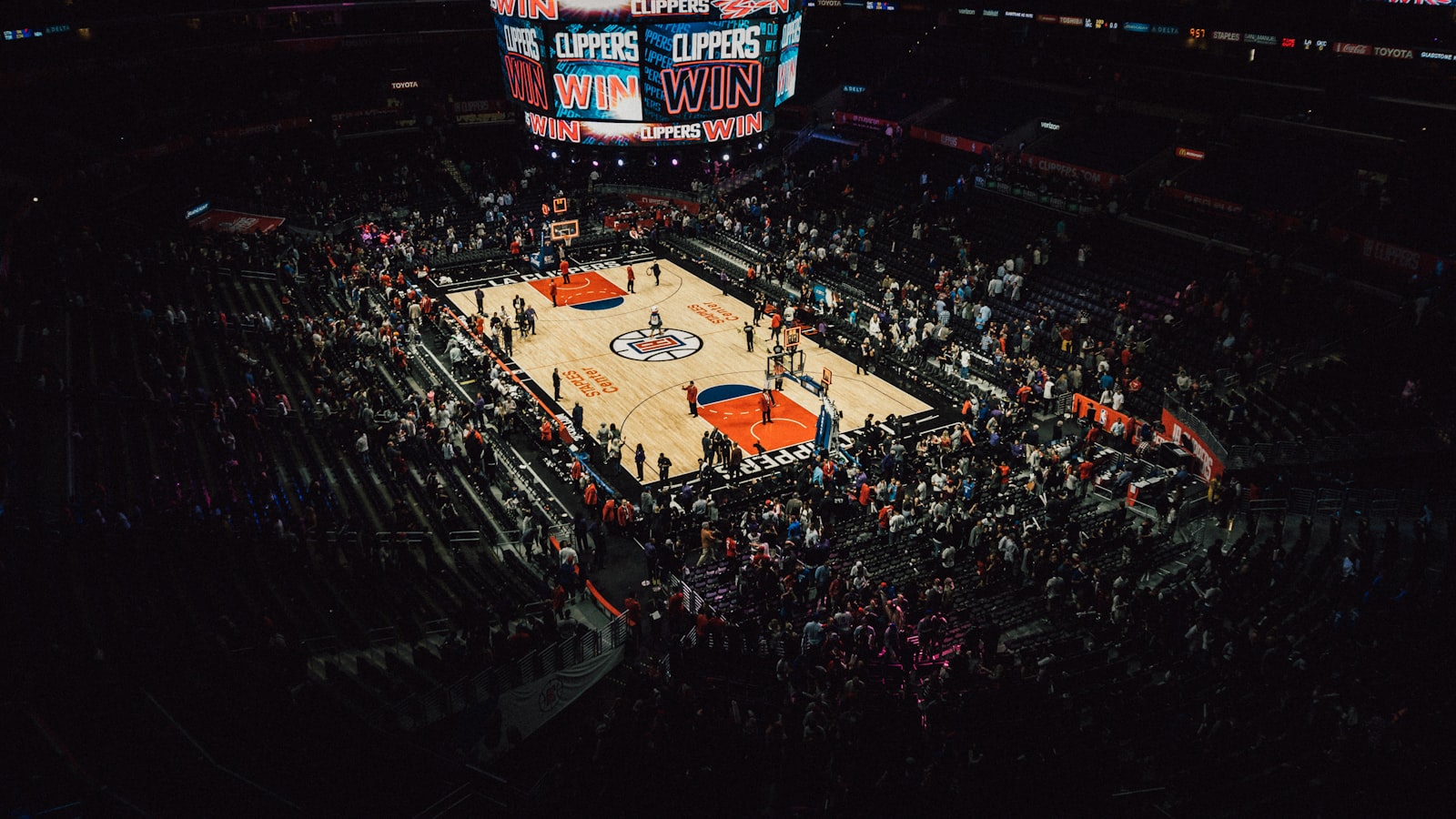
Every NBA offseason is a chain reaction. But in a summer when several major franchise decisions — Giannis Antetokounmpo’s future in Milwaukee, LeBron James’s player option in Los Angeles, the deepest draft class in years, and a Boston rebuild following another Finals exit — are all arriving simultaneously, the dependencies run unusually deep. What follows is not a team-by-team transaction list. It is a map of how one front-office decision triggers the next across the league, from Milwaukee’s front office to Boston’s cap sheet to San Antonio’s long-term blueprint built around Victor Wembanyama.
The NBA salary cap for the 2026–27 season is projected to rise to approximately $156 million, with the luxury-tax apron thresholds rising correspondingly, according to ESPN’s salary-cap tracker and league projections shared with reporters during the spring. That context shapes every conversation below. Teams above the second apron — a limit introduced in the 2023 collective bargaining agreement — face hard roster-building restrictions that limit sign-and-trade transactions and mid-level exception usage. Teams below it carry rare flexibility. The result is an offseason where financial structure, not just talent evaluation, will separate winners from losers.
Why this offseason is different
The 2023 CBA’s second apron has fundamentally altered the offseason calculus for established contenders. Teams that have repeatedly paid the luxury tax face compounding restrictions that were not in place as recently as 2021. That structural shift, combined with the depth of the 2026 draft class and an unusually crowded free-agency market, gives this summer a different character than recent ones.
Several front offices enter the period having finished the season short of championship expectations. Boston, which reached the Finals in back-to-back years, faces decisions about a core now in its prime contract years. Milwaukee is navigating public uncertainty about Antetokounmpo’s long-term intentions. Denver’s supporting cast around Nikola Jokić has drawn scrutiny after another postseason exit. Each situation feeds directly into the free-agency and trade market — and each is connected to the others.
Free agency: the big names and what is at stake
LeBron James: the decision that could reprice veteran contracts
LeBron James, who turned 41 in December 2025, holds a player option for the 2026–27 season with the Los Angeles Lakers, according to the NBA’s official transaction records. Whether he exercises that option, negotiates a new deal with the Lakers, or explores a move to a title contender carries market-wide consequences that extend well beyond Los Angeles.
If James opts out, every team with cap space will weigh the cost-benefit of a 41-year-old against the luxury-tax implications of a maximum contract. ESPN’s Brian Windhorst has written that the precedent dimension is significant: a productive James at 41 — he has continued to perform at an All-Star level in recent seasons, per NBA.com’s player statistics — changes how teams price other veterans in their late thirties, a cohort that includes several names in this free-agency class.
James has not stated publicly where he intends to play next season. The Lakers did not respond to a published request for comment on the player option timeline, as noted by multiple beat reporters covering the team.
Other marquee free agents and the salary-cap landscape
Beyond James, the summer free-agency class includes players whose destinations will define competitive balance for years. Devin Booker of the Phoenix Suns is eligible for a supermax extension discussion depending on All-NBA selections, which would push his annual salary above $50 million. Bam Adebayo of the Miami Heat is entering a contract decision year. Both represent significant commitments that their respective teams must decide whether to absorb or use as trade assets before the new league year opens.
Teams like the Golden State Warriors and the Los Angeles Clippers, already over the tax threshold, face diminishing roster-building options under the second apron’s restrictions. Mid-market clubs — Indiana Pacers, Oklahoma City Thunder — enter the summer with more structural flexibility and are expected to be active bidders for second-tier free agents, according to cap analyses published by ESPN and The Athletic.
ESPN’s Bobby Marks has estimated that as few as four franchises will have the cap room needed to offer a maximum contract without relying on exceptions. That scarcity alone will push more activity toward sign-and-trade structures — which are themselves constrained for apron teams — making this an unusually transactional offseason even by recent standards.
Giannis Antetokounmpo: Milwaukee’s defining choice
Giannis Antetokounmpo’s contract situation gives him leverage over Milwaukee’s direction this summer. The Bucks have finished three consecutive postseasons without advancing past the second round, a stretch that has visibly strained the franchise’s relationship with its front office and raised public questions about the roster’s ceiling. Bucks general manager Jon Horst has stated publicly that the organization’s plan is to build around Antetokounmpo, though he has declined to provide specifics about extension talks, according to reporting by The Athletic.
That public silence has fueled trade speculation reported by ESPN, The Athletic, and the Milwaukee Journal Sentinel with varying degrees of sourcing confidence. The core question is whether Milwaukee concludes that the current construction cannot deliver a title and chooses to reset, or whether a targeted free-agency or trade addition is enough to change the competitive picture.
Trade rumors: separating reality from positioning
Multiple contenders have been linked to Antetokounmpo in trade discussions reported by ESPN and The Athletic. The financial structure of any deal is complicated: Giannis’s projected maximum extension would push any acquiring team deep into second-apron territory, triggering restrictions on what can be sent back to Milwaukee in a sign-and-trade. That tension between what a bidder wants to offer and what Milwaukee can legally receive under the CBA is the central structural obstacle — not just a question of talent valuation.
What is verifiable, per public reporting, is that any credible trade package would require a combination of first-round picks and players on rookie-scale contracts. Whether Milwaukee decides to engage at all remains the more fundamental question, and one that Horst has not answered publicly.
The 2026 NBA Draft: what rebuilding teams need to know
Top prospects and which franchises benefit most
The 2026 NBA Draft is scheduled for late June at Barclays Center in Brooklyn, per the NBA’s official calendar. Draft analysts at ESPN and The Ringer have described the class as particularly deep at the wing position. Duke forward Cooper Flagg has been the consensus top prospect for most of the pre-draft evaluation period, drawing notice for his defensive versatility and shot creation at 6-foot-9 — though prospect comparisons carry inherent uncertainty and should be treated as illustrations rather than predictions.
The Washington Wizards entered the draft lottery holding the best odds for the No. 1 pick following one of the league’s worst records. The Detroit Pistons and Charlotte Hornets are also projected to pick near the top of the first round. All three franchises carry a clear mandate: select the best available prospect and build systematically rather than pursuing a quick fix in free agency that their cap situations could not support regardless.
The San Antonio Spurs hold a late-lottery selection, which limits their upside at the top of the class. Their long-term trajectory depends less on draft night than on what surrounds Victor Wembanyama — who posted elite numbers across points, rebounds, and blocks last season, per NBA.com — by the time training camp opens in the fall.
Ten franchises that will define the summer — and why
Boston Celtics: reconstruction after a Finals loss
Boston’s back-to-back Finals appearances have brought the Celtics to a familiar crossroads: the core that carried them there is now in its prime contract years simultaneously. Jayson Tatum and Jaylen Brown are both locked into maximum deals, per the NBA’s transaction database. The supporting cast — Al Horford, Payton Pritchard — faces free-agency or extension decisions this summer.
President of basketball operations Brad Stevens indicated in his post-season press conference that the organization intends to pursue complementary pieces “at the margins” rather than execute a structural rebuild, per a transcript published by The Boston Globe. What Stevens did not address is whether Boston has the cap flexibility to retain all key rotation players while adding depth. ESPN’s Marks has flagged the Celtics as a probable repeat luxury-tax payer regardless of outcome, which narrows their available tools under the current CBA.
San Antonio Spurs: the easy question and the hard ones
The easy question for San Antonio is whether to build around Wembanyama. The answer has been yes since the Frenchman won Rookie of the Year honors in 2024. The harder questions concern pace. Wembanyama has established himself among the most dominant big men in the league by his early twenties, per NBA.com’s statistical records. The Spurs have not yet translated that individual excellence into consistent team-level winning, and the front office faces a choice between spending aggressively this summer to accelerate the timeline or preserving flexibility for a later window.
Head coach Gregg Popovich, who stepped back from day-to-day coaching duties for health reasons during the 2024–25 season, has been involved in an advisory capacity, per reporting by the San Antonio Express-News. General manager Brian Wright has not detailed the team’s offseason approach publicly ahead of the draft.
Other franchises with league-wide ripple effects
Seven other franchises carry decisions with consequences that extend beyond their own rosters. The Phoenix Suns must resolve Booker’s extension before he reaches unrestricted free agency, a situation that has generated trade speculation whenever talks appear stalled. The Golden State Warriors are evaluating whether to execute a full rebuild — selling veteran contracts at trade value — or to make one more competitive push with Stephen Curry, who has continued to perform at an All-Star level into his late thirties. The Minnesota Timberwolves face a repeater-tax situation that limits roster movement despite a core capable of competing in the West.
The Miami Heat, Chicago Bulls, and Toronto Raptors all enter with enough cap space to be relevant bidders but insufficient star power to be considered genuine title threats without a major acquisition. How aggressively each spends will shape the second-tier market and could directly affect the trade value Milwaukee extracts if an Antetokounmpo deal moves forward.
Defending a championship in the second-apron era
Defending a title in the NBA’s current financial structure is harder than it has ever been. The second apron’s restrictions limit sign-and-trade transactions and prevent tax teams from acquiring players via the buyout market using their full mid-level exception. Any team that won a championship and is now projected deep into apron territory will face those constraints in trying to retain the role players who made its defensive and offensive schemes functional.
The margin for error in repeat bids is thin: one significant injury or one failed re-signing can alter an entire Eastern or Western Conference race. That dynamic is not hypothetical — the Golden State Warriors experienced it after their 2018 title run, and the Milwaukee Bucks faced similar attrition after 2021. Front offices that won championships recently are well aware of the pattern and are managing it in public statements and private cap planning simultaneously.
Offseason calendar: key dates to follow
Fans tracking the NBA offseason across all 30 teams should follow these dates, confirmed via the NBA’s official communications office and league calendar:
- Late June: NBA Draft, Barclays Center, Brooklyn. First round typically begins at 8 p.m. ET.
- Late June: Player option deadlines. James and other veterans must notify teams of their decisions.
- July 1: Free-agency negotiating window opens. Teams may begin discussions with free agents but cannot sign contracts.
- July 6: Free-agency signing period opens. Contracts can be executed.
- July 15: Qualifying offers must be tendered for restricted free agents.
- September: Rosters must be set for training-camp eligibility.
- October: NBA preseason tip-off, per the league’s preliminary schedule.
Any blockbuster moves involving players still under contract — Antetokounmpo, for example — must be structured as sign-and-trades or standard trades once the new league year begins July 1, since the trade deadline for the prior season has passed.
The chain that connects it all
The thread running through every decision above is interdependence. LeBron’s choice affects how teams price their veteran roster spots. Milwaukee’s Antetokounmpo decision sets the trade market’s ceiling and determines which contenders have assets left to spend in free agency. Boston’s willingness to pay the repeater tax shapes what it can offer in any deal. The top of the draft determines how quickly Washington, Detroit, and Charlotte can become relevant again — and whether those rebuilding franchises add competitive pressure to the West and East within two to three years.
Draft night is the first formal inflection point. When the team holding the No. 1 pick goes on the clock in Brooklyn, the summer officially begins — and each subsequent decision will narrow the options for everyone else.
Sources: ESPN salary-cap analysis and reporting by Bobby Marks and Brian Windhorst; The Athletic’s NBA coverage including front-office and contract reporting; NBA.com’s official transaction records, player statistics, and league calendar; The Boston Globe’s coverage of the Celtics’ post-season press conference; the San Antonio Express-News’s reporting on the Spurs’ coaching staff; the Milwaukee Journal Sentinel’s Bucks coverage. All contractual and roster information reflects publicly available records as of the time of publication. Future events described in this article are projections and scenarios based on current reporting, not confirmed outcomes.
Frequently asked questions
When does NBA free agency open in the summer of 2026?
The free-agency negotiating window opens July 1 at 6 p.m. ET, when teams can begin discussions with free agents. Contracts can be formally signed starting July 6, per the NBA’s official calendar.
Does LeBron James have a player option for the 2026–27 season?
Yes. According to the NBA’s official transaction records, James holds a player option for 2026–27 with the Los Angeles Lakers. He must notify the team of his decision by the player-option deadline in late June.
What is the NBA second apron and why does it matter this offseason?
The second apron is a hard salary threshold introduced in the 2023 collective bargaining agreement. Teams above it face restrictions on sign-and-trade deals, mid-level exception usage, and acquiring players via buyouts. Because several contenders are projected above this line, their roster-building options are significantly limited this summer.
Who holds the No. 1 pick in the 2026 NBA Draft?
The Washington Wizards entered the 2026 draft lottery with the best odds for the top pick after posting one of the league’s worst records. The draft is scheduled for Barclays Center in Brooklyn in late June.
Is Giannis Antetokounmpo leaving the Milwaukee Bucks?
There is no confirmed trade request as of publication. The Athletic, ESPN, and the Milwaukee Journal Sentinel have all reported on trade speculation, but Bucks GM Jon Horst has stated publicly that the organization plans to build around Antetokounmpo. The situation remains unresolved.
How does the Giannis trade situation affect other teams’ free-agency plans?
A Giannis trade would require any acquiring team to absorb a maximum-level contract, pushing it into second-apron territory and limiting its remaining cap tools. Teams weighing a Giannis bid must therefore weigh whether the asset cost and financial constraints leave them with enough supporting pieces to actually contend.