
Could one federal AI bill override every state AI law?
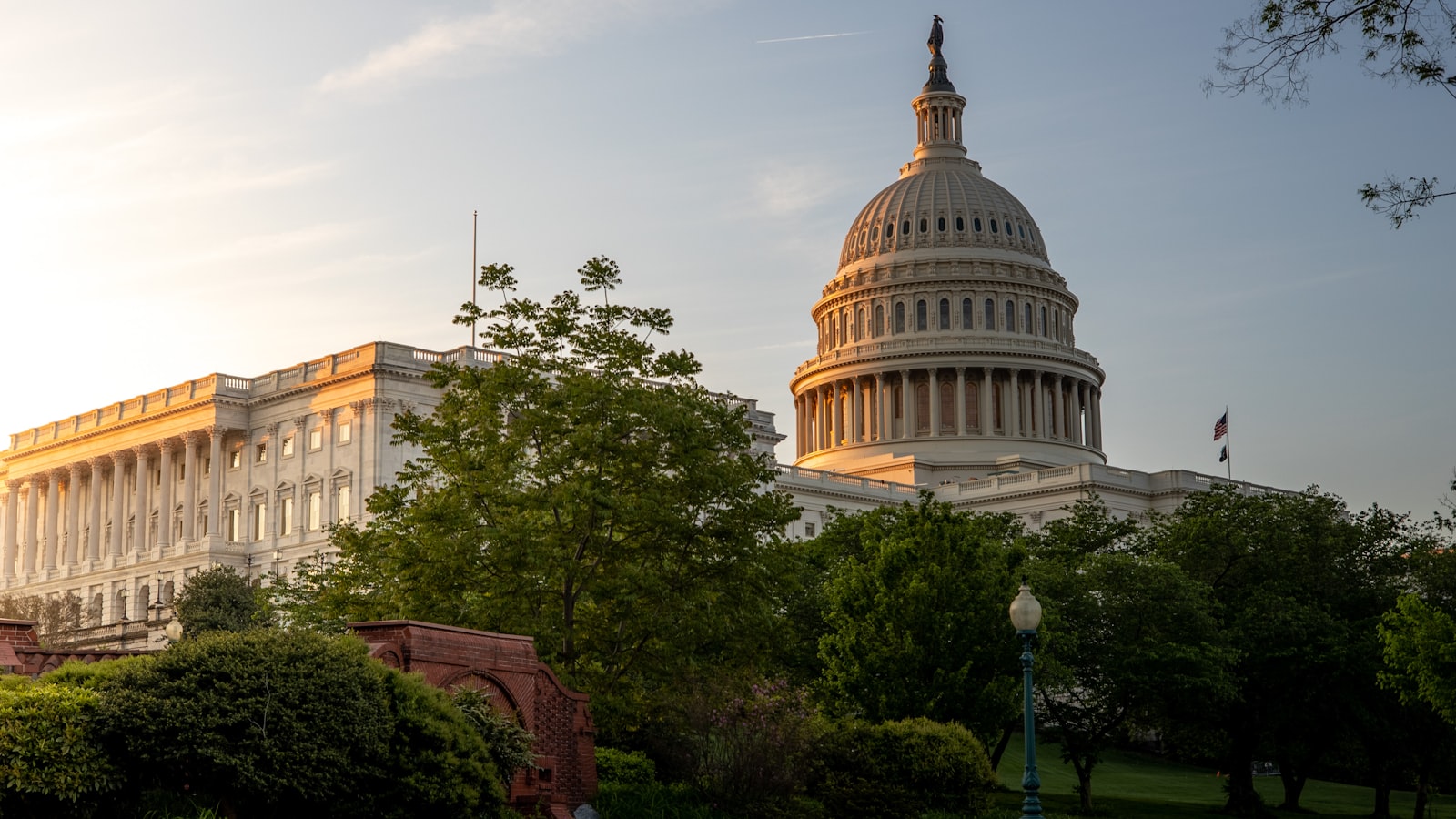
A sweeping federal drive to override every state-level artificial intelligence law in the United States reached a decisive inflection point in 2025 — reopening one of the most consequential federalism battles in technology policy in a generation. The episode exposed a fracture that neither party has fully resolved: whether the United States should govern artificial intelligence through a single national standard or through the decentralized, state-by-state experimentation that has historically produced the country’s most protective consumer laws.
The answer, for now, is neither. Congress has so far refused to hand the administration the preemption tool it wants, and states are pressing ahead with their own frameworks regardless. The result is a legal landscape that is simultaneously volatile and, for the moment, plural — a condition that pleases almost no one.
What federal preemption of AI law would actually mean
Preemption, in constitutional terms, is what happens when federal law supersedes state law under the Supremacy Clause of the U.S. Constitution. Congress can write that preemption explicitly — stating outright that a federal statute overrides state equivalents — or courts can find it implicitly when state and federal rules genuinely conflict. What the Trump administration and its allied legislators have been pursuing is explicit preemption: a clause inserted into a federal AI bill declaring that state and local governments may not enforce their own AI rules in covered areas.
That distinction matters enormously in practice. An executive order directing federal agencies to challenge state AI laws, as President Trump issued in early 2025 under the title “Ensuring a National Policy Framework for Artificial Intelligence,” is not the same as preempting them. Agencies can file briefs in litigation, issue guidance documents, or threaten to withhold federal funding — but absent a statute, courts applying field-preemption or conflict-preemption doctrine still need a federal law to displace. As Paul Hastings LLP noted in its analysis of the executive order, the administration’s case for federal preemption “will be more relevant if Congress were to enact a comprehensive federal AI framework.” Without that legislation, the order functions largely as a signaling document and a directive for federal agencies to look for existing grounds to challenge state rules — a slower and legally shakier path than a clean congressional override.
Georgetown Law professor David Vladeck, who has written on agency preemption authority, has observed in published scholarship that executive branch preemption campaigns without a statutory hook tend to stall in court precisely because judges require a clear congressional statement before displacing state police powers. That structural constraint is why the legislative vehicle matters so much — and why the Senate’s handling of the One Big Beautiful Bill Act in July 2025 was the pivotal moment of this entire debate.
The 99–1 Senate vote: what it revealed
The House passed a 10-year moratorium on state AI law enforcement as part of the One Big Beautiful Bill Act on May 22, 2025. The provision would have prohibited any state or locality from enforcing any AI regulation for a decade — the most sweeping preemption attempt in the bill’s history. The Senate’s response was categorical: on July 1, 2025, senators voted 99–1 to strip the moratorium before the bill reached President Trump’s desk, which he signed on July 4 without the AI provision, according to Goodwin’s analysis of the vote. Senator Marsha Blackburn (R-TN) led the bipartisan coalition that removed it.
That 99–1 margin is the most telling data point in this entire debate. It reveals that even senators from states with minimal AI legislation were unwilling to strip their own chambers — and their states’ attorneys general — of future regulatory authority. That reluctance is partly principled: federalism has deep Republican roots in the Senate, and many Republican senators represent states where algorithmic hiring tools and automated lending decisions are already subjects of constituent complaint. It is also partly political: state legislators, attorneys general, and governors do not want to explain to constituents why Washington just deleted their consumer protection laws. The vote was not close. It was not ideological. It was institutional self-preservation, and it is the clearest evidence available that the Senate, as currently constituted, will not pass broad AI preemption in one swallow.
Beyond the moratorium vote, Congress also declined to insert a state AI preemption mechanism into the fiscal year 2026 National Defense Authorization Act, another vehicle the administration had targeted, according to Ropes & Gray’s March 2026 analysis. Two failed vehicles in the same legislative session is a pattern, not a coincidence.
What the state patchwork actually looks like
The preemption push targets a patchwork that has grown with remarkable speed. More than 1,000 AI-related bills were introduced in state legislatures in 2025 alone, according to the National Conference of State Legislatures, and dozens have already become law. Each reflects different legislative priorities, technical definitions, and enforcement mechanisms — which is precisely what makes the patchwork genuinely burdensome for multi-state operators and genuinely valuable for the consumers those laws protect.
Colorado’s Artificial Intelligence Act (Senate Bill 24-205), set to take effect on June 30, 2026, requires developers and deployers of “high-risk” AI systems to conduct risk assessments, disclose AI use to consumers, and implement bias protections. The bill drew directly on the EU AI Act’s risk-tiering methodology and went through more than two years of stakeholder revision before passage — a level of deliberation that is rare for any state legislation. California’s Transparency in Frontier Artificial Intelligence Act (S.B. 53) mandates disclosure requirements for large frontier AI models. Texas, Utah, and several other states have enacted their own rules, each with different thresholds and enforcement mechanisms.
Sidley Austin’s analysis of the executive order noted that it explicitly criticizes Colorado’s algorithmic discrimination statute — framing it, alongside California’s law, as a textbook example of the “patchwork” the federal government wants to erase. That framing is significant: the administration is not targeting fringe state rules but the most carefully drafted, consumer-oriented statutes in the country. White & Case LLP noted in its tracker that Colorado’s and California’s laws remain in force “since Congress has not yet passed a federal AI law that preempts state AI laws” — but the firm advised clients to maintain compliance with both state and federal tracks simultaneously. That dual-track compliance advice is itself a measure of the uncertainty: companies are paying for legal work twice, precisely because no one knows which regime will govern next year.
Why Big Tech wants one federal rule — even a weaker one
The technology industry’s enthusiasm for federal preemption is not, in the view of many industry critics, primarily about consumer protection. It is about compliance cost and legal certainty. A company deploying an AI hiring tool, a credit-scoring model, or a medical triage system currently faces potentially different disclosure, audit, and liability requirements in all 50 states. A single federal standard — even one with fewer consumer protections than the most stringent state laws — offers a predictable, uniform environment for product development and legal exposure.
According to CIO Dive, Google and OpenAI both publicly advocated for a federal policy preempting state AI laws in 2025. Meta mounted its own lobbying effort, supporting political candidates whose positions aligned with the company’s preference for national over state-level regulation. These lobbying campaigns coincided with a period in which Google, OpenAI, Amazon Web Services, Microsoft, and Meta were collectively committing hundreds of billions of dollars to U.S. AI infrastructure — a dynamic the industry has used to argue that regulatory fragmentation jeopardizes those investments.
Mintz’s analysis found that “major tech industry associations have publicly supported federal preemption to promote uniform standards and limit regulatory fragmentation.” That argument has a logic worth taking seriously: a startup building a general-purpose AI compliance tool does not have the legal resources of Google. The compliance asymmetry is real — large incumbents can absorb 50-state complexity; smaller competitors often cannot.
But critics at the Center for American Progress counter that this asymmetry is an argument for harmonizing state laws upward — building a federal floor at the level of the best state protections — not for eliminating them. CAP’s November 2025 report described the preemption push as posing “serious risks” to consumers, arguing that states have historically served as laboratories for consumer protection innovation that federal law later codifies. The report specifically identified the risk that a federal preemption regime would eliminate state-level protections against AI-driven employment discrimination, predatory lending algorithms, and discriminatory housing tools — areas where federal enforcement has historically been inconsistent.
Those are not hypothetical harms. Academic researchers at MIT and Stanford have documented measurable bias in commercially deployed AI hiring and credit tools in peer-reviewed work published between 2019 and 2024. And several state-level enforcement actions — most prominently in Illinois under the Artificial Intelligence Video Interview Act, which has generated more than two dozen civil complaints since 2023 — have already produced accountability that no federal agency has replicated at scale.
The original editorial analysis this debate demands
Set aside the firm advisories and the lobbying filings for a moment and consider what the legislative record actually shows. The administration entered 2025 with a clear theory of the case: that the United States needs a uniform national AI framework to compete with China and the European Union, and that state-level variation is the primary obstacle. That theory has not survived contact with Congress, and the reason it has not is illuminating.
Federal preemption of consumer protection law has historically required one of two conditions: either a genuine interstate commerce problem that states cannot solve individually (as with airline deregulation or securities law), or a sufficiently powerful industry coalition that can extract the preemption as a legislative quid pro quo. The AI preemption push has the industry coalition — the largest technology companies in the world are aligned on this question — but it does not yet have the legal architecture to deliver it. The executive order is an instrument of political signaling, not regulatory displacement. The moratorium was an instrument of political ambition that the Senate found constitutionally objectionable. Neither is a substitute for a statute.
The more precise question, then, is not whether federal AI law will eventually preempt state law — it probably will, in some form, because Congress eventually legislates in fields where interstate commerce is genuinely implicated. The question is what the preemption clause will say and what it will preserve. Will it be a floor — a federal minimum that states may exceed — or a ceiling that states may not surpass? The CAN-SPAM Act of 2003 was a ceiling: it overrode tougher state anti-spam statutes and, as critics predicted, was followed by a measurable increase in commercial spam as enforcers found the federal standard harder to apply than the state statutes it replaced. Section 230 of the Communications Decency Act was similarly structured as a ceiling, precluding states from imposing their own platform-liability regimes — a structure that remains in place today and is itself the subject of ongoing congressional debate.
In both cases, industry groups secured federal preemption by arguing that state variation created an unworkable legal environment for services operating across state lines. Consumer advocates in both fights warned that federal floors would become federal ceilings. That warning is now being repeated verbatim in the AI context by the same types of organizations, and the historical record gives it weight that the current legislative debate has not yet fully absorbed. Akin Gump’s analysis of the White House’s legislative agenda notes that the administration directed the Office of Legislative Affairs to prepare formal recommendations for Congress — but formal recommendations are not bills, and bills are not law. The gap between those three stages is where this fight will be decided.
What to watch as this moves toward Congress
The legislative path for a comprehensive federal AI bill with a preemption clause cleared neither chamber in 2025. The key variables heading into the next session are whether the Senate Commerce Committee advances a bipartisan AI framework bill that trades narrower preemption for stronger baseline consumer protections; whether state attorneys general begin filing preemptive suits to block agency actions taken under the executive order; and whether Colorado’s June 2026 implementation date arrives before Congress acts — which would force the federal government to either back down or litigate openly against a law that enjoys broad public support in the state that drafted it.
That last scenario is the one most likely to produce a decisive legal ruling. If the administration instructs the Justice Department to challenge Colorado’s AI Act in federal court after it takes effect, the resulting litigation would, for the first time, require a federal judge to rule on whether the executive order’s preemption theory has any operative legal force. The answer, absent a statute, is almost certainly no — but the political cost of that loss could accelerate the very congressional action the administration has so far failed to secure.
Opposition to the preemption push has coalesced around a straightforward argument: states act faster than Congress, and their laws protect real people now. Hundreds of civil society, labor, and consumer protection organizations have voiced opposition to the proposed federal framework, according to the Mintz analysis. The volume of client advisories from major law firms — Ropes & Gray, Goodwin, Mintz, Akin Gump, Paul Hastings, Sidley Austin, White & Case — published in the six months following the executive order is itself a proxy for how seriously sophisticated institutional clients are taking the risk of rapid, sweeping preemption. Law firms bill for certainty; when they are all telling clients to prepare for two contingencies at once, the uncertainty is structural, not speculative. No floor vote on a standalone federal AI governance bill with a preemption clause has been scheduled in either chamber as of this writing.
Legal analyses and policy assessments cited above were provided by Ropes & Gray, Goodwin, Mintz, Akin Gump, Paul Hastings, Sidley Austin, White & Case, CIO Dive, and the Center for American Progress. The National Conference of State Legislatures supplied the figure on AI-related bills introduced in 2025. The FTC’s published guidance provided context on the CAN-SPAM Act’s history.
Frequently asked questions
What is AI preemption and why does it matter?
AI preemption means a federal law would supersede all state-level AI regulations, so companies would only need to comply with one national standard rather than dozens of different state rules. It matters because it determines whether states can set stricter consumer protections than what Congress passes.
Which states have already passed AI laws that could be overridden?
Colorado, California, Texas, and Utah are among the states with active AI laws. Colorado’s AI Act (SB 24-205), set to take effect June 30, 2026, and California’s Transparency in Frontier Artificial Intelligence Act (S.B. 53) are the most frequently cited examples in federal discussions.
Did the federal AI moratorium pass in 2025?
No. The U.S. House passed a 10-year moratorium on state AI laws as part of the One Big Beautiful Bill Act in May 2025, but the Senate voted 99–1 to strip that provision before President Trump signed the bill on July 4, 2025.
Why do tech companies prefer a federal AI law over state laws?
Technology companies argue that complying with 50 different state regulatory regimes is costly and unpredictable. A single federal standard, even if less stringent than the toughest state laws, provides legal certainty and reduces compliance overhead for products deployed nationally.
What did Trump’s executive order on AI actually do?
The order, titled ‘Ensuring a National Policy Framework for Artificial Intelligence,’ directed federal agencies including DOJ, FTC, FCC, and Commerce to identify and challenge state AI laws that conflict with the administration’s national framework. It does not itself preempt any state law — that still requires an act of Congress.
What historical precedents exist for federal preemption of state tech laws?
The CAN-SPAM Act of 2003 overrode tougher state anti-spam laws, and Section 230 of the Communications Decency Act blocks states from imposing their own platform-liability regimes. Critics argued both precedents locked in weaker consumer protections than states had achieved independently.